

- When Your Body Feels Like It's Betraying You
- Why Does Anxiety Cause Physical Symptoms?
- The Weird Physical Symptoms of Anxiety Nobody Talks About
- Why These Symptoms Often Get Misdiagnosed
- When Your Family Doesn't Believe You
- These Symptoms Are Real — But So Is the Cause
- What Helps — Practical First Steps
- When to See a Doctor
- Frequently Asked Questions
- You're Not Imagining It
You’ve Googled your symptoms three times this week. Your hands went tingly for no reason. Your chest felt tight even though you weren’t doing anything stressful. You felt dizzy in the middle of a perfectly ordinary afternoon. And yet every test comes back normal. What most people don’t realize is that these are classic weird physical symptoms of anxiety — and they’re far more common, and far more misunderstood, than anyone talks about.
Here’s what nobody tells you clearly enough: anxiety is not just a mental experience. It lives in your body, and it produces some of the strangest, most confusing physical symptoms imaginable. Symptoms that feel like heart disease, neurological problems, digestive disorders, or something you can’t even name. Symptoms that send people to the emergency room, only to be sent home with “everything looks fine.”
If that’s been your experience, this article is for you. The weird physical symptoms of anxiety are real, they are documented, and they have a very clear explanation — even when they feel completely inexplicable. You are not imagining this. Your body is not betraying you for no reason. And once you understand what’s happening, the symptoms become a little less terrifying.

When Your Body Feels Like It’s Betraying You
Most people, when they think of anxiety, picture worry. Racing thoughts. Nervousness before a big event. What they don’t picture is waking up at 3am with a burning sensation in their legs, or feeling like the room is slightly unreal, or having their heart pound out of nowhere while sitting completely still.
These weird physical symptoms of anxiety are actually among the most common reasons people seek medical help — and among the most frequently misdiagnosed. Studies suggest that a significant portion of people who visit their doctor for unexplained physical complaints are actually experiencing anxiety-related somatic symptoms, often without even knowing they have anxiety in the first place.
This is especially true in communities where mental health isn’t openly discussed. In many South Asian, Middle Eastern, and other collectivist family cultures, anxiety often gets labeled as “weakness,” “overthinking,” or dismissed entirely. So the physical symptoms become the only language the body has left to communicate that something is wrong. If your family has ever told you “it’s just gas” or “you’re being dramatic,” while you were genuinely suffering — this article is for you too.
Why Does Anxiety Cause Physical Symptoms?
Before diving into the specific weird physical symptoms of anxiety, it helps to understand the mechanism behind them — because once you understand it, everything makes sense.
When your brain perceives a threat — real or imagined, physical or emotional — it triggers the fight or flight response. Your nervous system floods your body with stress hormones like adrenaline and cortisol. Your heart rate increases. Your breathing changes. Blood gets redirected away from your digestive system and toward your muscles. Your senses sharpen.
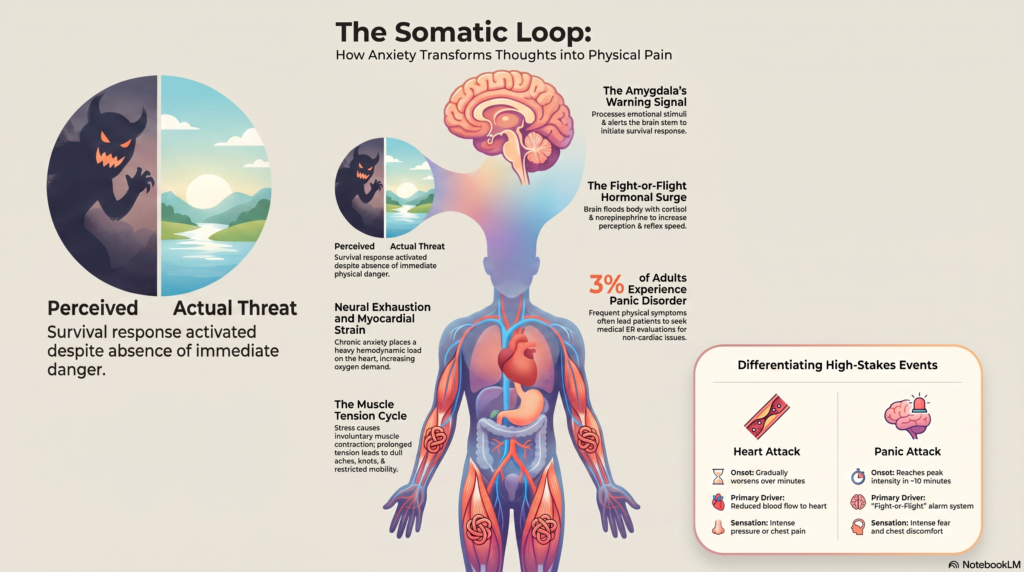
This is a brilliant survival system. The problem is that modern anxiety often keeps this system switched on long after the “threat” has passed — or activates it in response to things that aren’t physical dangers at all, like a difficult conversation, a deadline, or a crowded room. When your body stays in this state of low-level alert for extended periods, the weird physical symptoms of anxiety start to pile up. Your nervous system is essentially working overtime, and the effects show up everywhere — from your skin to your stomach to your fingertips.
The Weird Physical Symptoms of Anxiety Nobody Talks About
This is the heart of it. Here are the physical sensations that anxiety produces — many of which people spend months trying to diagnose without ever connecting them to stress or anxiety.
Tingling or Numbness
One of the most alarming weird physical symptoms of anxiety is tingling, numbness, or a “pins and needles” sensation — often in the hands, feet, face, or scalp. When you’re anxious, your breathing often becomes shallow and rapid, which changes the levels of carbon dioxide in your blood. This shift directly affects how your nerves fire, producing those strange tingling sensations. It feels alarming — and many people immediately fear a stroke or nerve damage — but it’s a very well-documented physical symptom of anxiety.
Feeling Like You Can’t Breathe Properly
Another common but rarely discussed physical symptom of anxiety is the sensation that you can’t get a full breath — like your lungs won’t expand completely, no matter how deeply you try to inhale. This often gets worse the more you focus on it, because anxiety about breathing makes the breathing pattern more irregular. Paradoxically, slowing down and breathing less forcefully usually helps more than trying harder to breathe deeply.
Dizziness or Feeling “Unreal”
Derealization — the feeling that the world around you is slightly unreal, foggy, or dreamlike — is one of the weird physical symptoms of anxiety that genuinely frightens people. So is a sudden sense of being disconnected from your own body, as though you’re watching yourself from the outside. These feelings are produced by the hyperventilation that often accompanies anxiety, and while they’re deeply unsettling, they are not dangerous. Many people who experience these symptoms fear they are “going crazy” — they are not.
Chest Tightness or a Racing Heart
Chest tightness, palpitations, or a heart that suddenly pounds for no apparent reason are among the most frightening weird physical symptoms of anxiety — and among the most common reasons people end up in the emergency room. Anxiety activates the cardiovascular system as part of the fight or flight response, causing the heart to beat faster and the chest muscles to tighten. While it’s always worth ruling out cardiac causes with a doctor, many people discover after extensive testing that anxiety was the culprit all along.
Stomach Problems and Nausea
The gut and the brain are directly connected through the vagus nerve — a link so significant that scientists sometimes call the gut “the second brain.” This is why the weird physical symptoms of anxiety so often show up in the digestive system: nausea, cramping, sudden diarrhea, bloating, or a churning stomach that appears seemingly out of nowhere. Many people with anxiety-related gut symptoms spend years being investigated for irritable bowel syndrome or food intolerances before the anxiety connection is made.
Sweating, Shaking or Trembling
Sudden sweating — especially in the palms, underarms, or face — and fine trembling or shaking in the hands or legs are direct physical symptoms of anxiety driven by adrenaline. These can appear even when you don’t feel consciously anxious, which is part of what makes them so confusing. Your nervous system can be in a state of activation before your conscious mind has caught up with it.
Skin Crawling or Burning Sensations
A lesser-known but very real group of weird physical symptoms of anxiety involves the skin — a crawling feeling under the surface, burning or prickling sensations without any rash or visible cause, or hypersensitivity where ordinary touch feels uncomfortable. These are caused by the same hyperactive nervous system response, and they often appear during periods of prolonged, chronic stress rather than acute anxiety attacks.
Muscle Weakness or Heavy Limbs
Feeling like your legs are made of lead, or like your arms have suddenly become too heavy to lift comfortably, is another of the physical symptoms of anxiety most people don’t immediately connect to stress. When muscles are held in a state of tension for extended periods — which is what anxiety does — they fatigue more quickly, leading to that characteristic heaviness and weakness.
Feeling Like You Might Faint
A sudden sensation of almost-fainting — lightheadedness, visual dimming at the edges, a sudden loss of steadiness — is another physical symptom of anxiety that tends to send people into a spiral of fear. It’s caused by a drop in blood pressure that can occur during intense anxiety, and while it’s frightening, it very rarely results in actual fainting. Understanding this can help reduce the secondary anxiety the feeling creates.

Why These Symptoms Often Get Misdiagnosed
One of the most frustrating things about the weird physical symptoms of anxiety is how easily they mimic other conditions. Chest tightness gets investigated as a cardiac problem. Tingling and numbness raises concerns about multiple sclerosis. Dizziness gets attributed to inner ear issues. Stomach symptoms get labeled as IBS.
None of these investigations are wrong to pursue — ruling out physical causes is always the right first step. But what often happens is that people cycle through specialist after specialist, accumulate normal test results, and still have no explanation for what their body is doing. The anxiety connection frequently gets missed because no one asks the right questions, or because the person themselves doesn’t connect their symptoms to stress.
When Your Family Doesn’t Believe You
For many readers — particularly those from South Asian, Middle Eastern, or other cultures where mental health conversations are still stigmatized — the physical symptoms of anxiety come with an extra layer of difficulty: the people around you may not believe that what you’re feeling is real.
“You’re just overthinking.” “Go for a walk, you’ll be fine.” “It’s just gas.” “Stop being dramatic.”
These dismissals are painful, and they delay treatment. If this has been your experience, know that the weird physical symptoms of anxiety are medically documented, scientifically understood, and taken seriously by healthcare professionals even when family members aren’t there yet. You don’t need someone else’s validation to seek help.
As we explored in our guide to social anxiety at work, anxiety often forces people to carry their struggles in silence — and the physical symptoms are one of the ways the body eventually refuses to stay quiet.
These Symptoms Are Real — But So Is the Cause
It’s worth saying clearly: just because these physical symptoms of anxiety have a psychological root doesn’t make them less real. The tingling is real. The chest tightness is real. The nausea is real. The nervous system genuinely produces these sensations — they are not invented or imagined.
What changes when you understand the anxiety connection is not the reality of the symptoms, but your relationship to them. Fear of the symptoms — the “what if this is something serious?” spiral — often amplifies them significantly. When you know that a racing heart during anxiety is your adrenaline doing its job, and not a sign of cardiac disease, the fear reduces, and often the symptom does too.
What Helps — Practical First Steps

You don’t need to overhaul your life overnight. Here are some starting points that genuinely help with the weird physical symptoms of anxiety:
- Slow your breathing deliberately. Try breathing in for 4 counts, holding for 4, out for 6. The extended exhale activates your parasympathetic nervous system — the “rest and digest” counterpart to fight or flight.
- Name what’s happening. When a symptom appears, saying to yourself “this is anxiety, this is my nervous system, I am safe” sounds simple but actively reduces the fear response.
- Reduce stimulants. Caffeine, energy drinks, and even some medications amplify the physical symptoms of anxiety significantly. Cutting back often produces noticeable relief.
- Move your body gently. Walking, stretching, or yoga help discharge the adrenaline that physical symptoms of anxiety are built on.
- Keep a symptom journal. Tracking when symptoms appear, what was happening, what you ate, and how you slept often reveals patterns that make the anxiety connection clearer — both to you and to any doctor you’re working with.
- Talk to someone who understands. Whether a therapist, a trusted friend, or an online community, putting words to what you’re experiencing lightens the load considerably.
When to See a Doctor
Always rule out physical causes first, especially for chest pain, severe dizziness, or neurological symptoms like sudden one-sided numbness or weakness. Anxiety produces many strange physical symptoms — but not all strange physical symptoms are anxiety. A doctor who takes your concerns seriously and runs appropriate tests is the right starting point, even if the eventual answer turns out to be anxiety-related.
If you’ve already been tested and cleared, and you’re still experiencing these symptoms regularly, that’s a strong signal to talk to a mental health professional about whether anxiety could be the underlying cause.
Frequently Asked Questions
Can anxiety really cause physical symptoms with no psychological trigger?
Yes. Anxiety can operate below conscious awareness — your nervous system can be activated before your conscious mind registers any worry. This is why people sometimes experience physical symptoms of anxiety in situations that don’t feel obviously stressful.
How do I know if my symptoms are anxiety or something medical?
Always see a doctor to rule out physical causes first. If tests come back normal and symptoms persist, especially during stressful periods, anxiety is worth exploring with a mental health professional.
Can anxiety cause symptoms every day, not just during panic attacks?
Absolutely. Chronic low-level anxiety produces persistent, ongoing physical symptoms that don’t come in dramatic waves. Many people live with daily weird physical symptoms of anxiety without ever having a classic panic attack.
Will the physical symptoms of anxiety go away on their own?
They often reduce significantly with treatment — whether therapy, lifestyle changes, medication, or a combination. Left unaddressed, chronic anxiety tends to maintain or worsen physical symptoms over time.
You’re Not Imagining It
The weird physical symptoms of anxiety are real, they are common, and they are among the most isolating experiences a person can have — especially when the people around you don’t understand what’s happening, or when every medical test comes back normal and you’re still suffering.

Your body is not broken. It is doing exactly what it was designed to do — responding to a threat signal — only the signal has gotten stuck. Understanding that is the first step toward feeling better.
If any of this resonated with you, you might also find it helpful to read about what caregiver stress and burnout can do to the body — because the physical toll of prolonged stress looks remarkably similar, whatever its source.